(Updated ) 10 min read
Sell a Fire-Damaged House in Knoxville: What You Need to Know
How to sell a fire, water, or storm-damaged house in Knoxville, TN. Learn about insurance claims, rebuilding decisions, property valuation, and your options for a fast cash sale in Knox County.
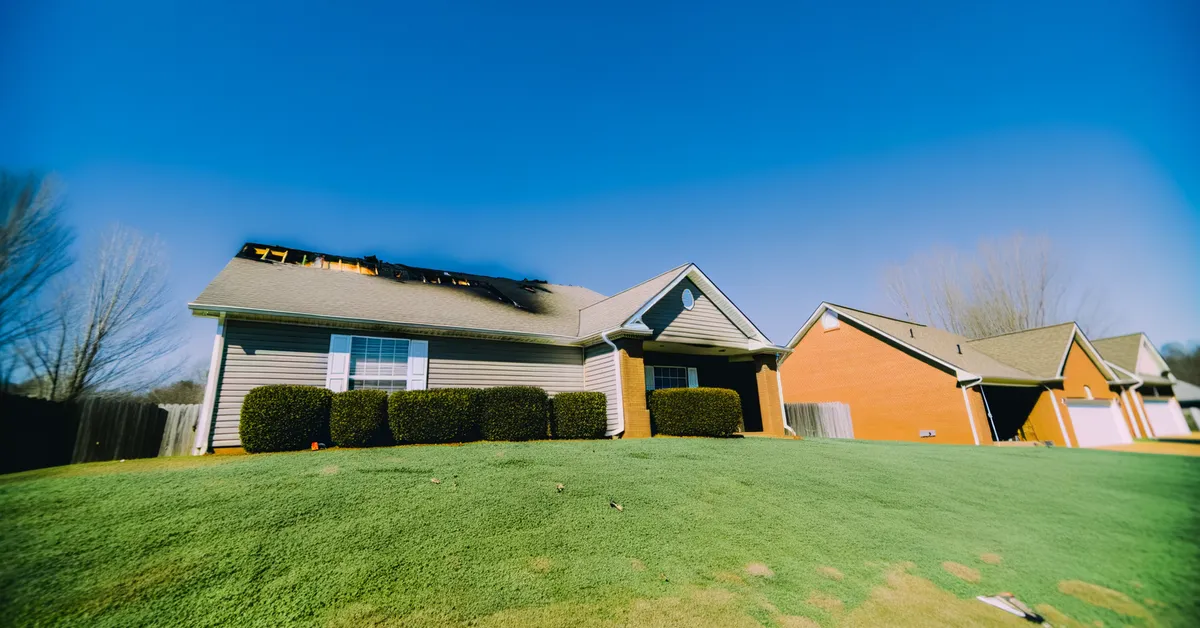
There’s a specific kind of shock that comes with standing in your own home after a fire. Or walking into the basement after a pipe burst while you were at work. Or pulling into the driveway after a storm and seeing a tree through your roof.
It’s not just property damage. It’s the feeling that everything just got complicated in a way you can’t undo.
We’re Reid, Ty, and Mark. We’ve worked with dozens of Knoxville homeowners dealing with exactly this — fire, water, storms, the whole spectrum. Here’s what you actually need to know. No sugarcoating. No pressure.
What you’ll learn in this article:
- Whether you can sell a fire-damaged house in Knoxville (yes) and what your options are
- How insurance claims interact with a property sale — and what to watch out for
- The real math on rebuilding vs. selling as-is after fire, water, or storm damage
- How we determine the value of a damaged property with a transparent formula
Can I Sell a Fire-Damaged House in Knoxville?
Yes. Full stop. You can sell a fire-damaged house in Knoxville, Knox County, or anywhere in East Tennessee. There’s no law saying you have to rebuild or repair before transferring ownership. Cash buyers like Volunteer Home Buyers purchase fire-damaged homes in any condition — from minor smoke damage to structures that are barely standing.
A lot of Knoxville homeowners assume a fire-damaged house is unsellable. It’s not. The real question isn’t whether you can sell — it’s whether you should rebuild, file an insurance claim, or sell the property as-is. Each path has trade-offs, and the right answer depends on your finances, your coverage, and honestly, what you want your life to look like six months from now.
Here’s what matters: a fire doesn’t erase the value of your property. The land still has value. Salvageable materials still have value. And in neighborhoods across Knoxville — from Fountain City to Farragut, Halls to Hardin Valley, the older streets off Chapman Highway — there’s real demand for properties that need work.
What we see most often:
- Homeowners who are emotionally done and just want to move on
- Families who can’t afford to rebuild even with partial insurance
- Landlords with damaged rentals that aren’t worth the reinvestment
- Owners of vacant properties where damage went unnoticed for weeks or months
Last winter, we bought a place in South Knoxville where a kitchen fire had spread to the attic. The homeowner — a retired teacher — told us she’d had three contractors come out, and none of them could start work for four months. She was living with her daughter in Maryville, paying a mortgage on a house she couldn’t live in, and just wanted it over. We closed in sixteen days. She cried at the closing table, and honestly, Ty got a little misty too.
What About Insurance Claims? Can I Still Sell?
You can sell a fire-damaged home whether you’ve filed an insurance claim, are in the middle of one, or haven’t filed at all. Your insurance claim and your decision to sell are two separate processes. But how they interact matters — and getting this wrong can cost you real money.
If you have active homeowner’s insurance:
Your policy likely covers fire damage, and you’re entitled to file a claim regardless of whether you sell. Here’s where it gets tricky:
- Dwelling coverage pays for structural repairs or rebuilding. If you sell instead of rebuilding, the insurance company may only pay the actual cash value (ACV) rather than the full replacement cost value (RCV). That gap can be tens of thousands of dollars.
- Contents coverage is separate from the structure. You can still claim damaged personal property even if you sell the house.
- Loss of use / additional living expenses (ALE) covers temporary housing while your home’s uninhabitable. This applies regardless of your decision to sell.
Don't sign a final insurance release or settlement before understanding how selling the property affects your payout. Selling may reduce your claim from full replacement cost (RCV) to actual cash value (ACV) — a gap that can be tens of thousands of dollars. Talk to your adjuster and consider hiring a public adjuster before making any decisions.
A word of caution: Selling the property doesn’t void your insurance claim, but it can affect how much you receive. Talk to your adjuster. And seriously consider getting a public adjuster involved if the claim is substantial. Public adjusters work on your behalf — not the insurance company’s — and typically recover 20-50% more than homeowners who negotiate on their own. We’re not attorneys and can’t give legal advice, but we’ve seen the difference a good public adjuster makes firsthand.
If you don’t have insurance or your policy lapsed:
More common than people think. Especially on inherited properties or rentals in areas like South Knoxville or Oak Ridge. Without insurance, your options narrow — but selling for cash becomes even more practical because you don’t have funds available for reconstruction anyway.
| Scenario | Insurance Claim | Selling for Cash | Both |
|---|---|---|---|
| Home with full coverage | File claim, receive payout, rebuild | Sell as-is, keep proceeds | File claim, sell property, payout may be reduced to ACV |
| Home with partial coverage | File claim for covered portions | Sell as-is, avoid out-of-pocket rebuild costs | File claim, sell property, use claim funds + sale proceeds |
| No insurance | N/A | Sell as-is for land + salvage value | N/A |
| Lapsed policy | May still have limited coverage window — check immediately | Sell as-is, avoid carrying costs | Check policy terms, then decide |
Do I Need to Rebuild Before Selling My House?
Fire-damaged structures can pose serious safety risks — weakened framing, compromised electrical systems, unstable flooring, and toxic residue from burned materials. Do not enter a fire-damaged home without professional clearance, and never attempt DIY repairs on structural fire damage.
No. You don’t need to rebuild, repair, or even sweep the floor before selling your fire-damaged property in Knoxville. We buy properties in their current condition — charred framing, smoke damage, water damage from the hoses, collapsed roofing, all of it.
Here’s the math most homeowners don’t think through:
Rebuilding a fire-damaged home in Knox County can run $80 to $200+ per square foot depending on how bad the damage is. For a typical 1,500 square foot home with significant fire damage, you’re potentially looking at $120,000 to $300,000 in reconstruction costs — plus 6-12 months of construction time, permits, contractor coordination, and carrying costs (property taxes, your remaining mortgage, insurance on a property you can’t live in).
The question that actually matters: Will the post-repair market value exceed the cost of repairs plus what you could get selling as-is right now? In a lot of cases — especially in neighborhoods like Bearden, West Knoxville, or Maryville — the answer is no. The numbers just don’t work for the homeowner. We’ve run the math with sellers at the kitchen table (well, what used to be the kitchen table) and watched their faces change when they see it on paper.
When rebuilding might make sense:
- Your insurance covers the full replacement cost
- You want to continue living in the home
- The damage is cosmetic or limited to one area
- The neighborhood commands very high per-square-foot prices
When selling as-is makes more sense:
- Your insurance payout won’t cover full reconstruction
- You don’t have the savings to bridge the gap
- You’re emotionally ready to move on
- The property was already aging or had deferred maintenance before the fire
- You’ve inherited the property and don’t want to manage a rebuild from a distance
What About Water or Storm Damage?
Same principles as fire damage — you can sell as-is without making repairs. But water damage specifically deserves some extra attention because it creates problems that get worse every single day you wait.
Water damage categories Knoxville homeowners should understand:
- Category 1 (Clean water): Burst pipes, supply line leaks. Easiest to address but still causes structural damage if you don’t deal with it.
- Category 2 (Gray water): Washing machine overflows, dishwasher leaks. Contains contaminants that can cause illness.
- Category 3 (Black water): Sewage backups, flooding from rivers or creeks. Hazardous. Requires professional remediation. Don’t mess around with this one.
Knoxville’s geography makes certain areas more vulnerable. Properties near the Tennessee River, flood-adjacent zones in South Knoxville, or low-lying areas in Blount County face higher risk for storm-related water intrusion. Older homes in Fountain City and Halls with aging plumbing are common candidates for pipe-related water damage. (Mark walked through a place off Broadway last March where a pipe had been leaking behind the wall for — best guess — two years. The drywall was basically paper mache.)
Storm damage in Knox County typically includes:
- Roof damage from wind, hail, or fallen trees
- Siding and window damage
- Foundation shifting from saturated soil
- Power surge damage to electrical systems
The mold factor: This is the big one with water damage. In Tennessee’s humidity, mold can start forming within 24-48 hours of water intrusion. If your home had standing water — even briefly — there’s a strong chance mold has developed behind walls, under flooring, or in the crawl space. Professional mold remediation in Knoxville typically runs $5,000 to $30,000 depending on the extent.
When you sell to Volunteer Home Buyers, we factor all of that into our offer. You don’t need to get mold testing, hire remediation companies, or do any cleanup. We handle it all after closing.
How Do You Determine the Value of a Damaged Property?
This is the most important question, and you deserve a transparent answer. When Reid, Ty, or Mark evaluate a damaged property in Knoxville or Knox County, we look at five things:
1. Land value. Every property has land value regardless of the structure’s condition. In Knoxville’s growing market, land in areas like West Knoxville, Hardin Valley, and Farragut has appreciated a lot. Even if the house is a total loss, the lot itself has real worth.
2. Comparable sales (comps). We look at what similar homes in the same neighborhood have sold for after being repaired. That gives us the “after repair value” (ARV) — the ceiling for what the property could be worth once restored.
3. Estimated repair costs. We walk the property (or review damage documentation if you’ve got photos and reports) and estimate what it’d cost to bring the home back to market-ready condition. We use actual contractor pricing from Knox County — not national averages pulled from some website.
4. Carrying costs. While we renovate, we’re paying property taxes, insurance, utilities, and financing costs. Those get factored in.
5. Our margin. We’re transparent about this: we need to make a reasonable profit to stay in business and keep helping Knoxville homeowners. We’re not trying to hit home runs on every deal — we aim for fair, sustainable margins that let us keep doing this.
Here’s what the formula looks like with real numbers:
| Component | Example |
|---|---|
| After Repair Value (ARV) | $220,000 |
| Minus estimated repairs | -$75,000 |
| Minus carrying costs | -$12,000 |
| Minus our margin | -$25,000 |
| Your cash offer | $108,000 |
Is that full retail value? No — and any cash buyer who tells you otherwise is lying. But it’s a fair price that reflects the real costs involved, and it comes with zero risk, zero repair costs, and zero waiting on your end.
Need help right now? Call (865) 324-1736 for a free, confidential conversation.
Get Your Free Cash OfferWhat Makes Selling a Damaged Home to Us Different?
We’re not a faceless corporation. We’re not out-of-state investors reading off a script. Reid, Ty, and Mark are Knoxville guys who understand what it’s like to see your home damaged and feel stuck.
- One honest visit. We walk the property once, assess the damage, and present a no-obligation offer. No parade of contractors. No strangers.
- We coordinate with your insurance. If you’ve got an active claim, we’ll work around the timeline and help you understand how selling affects your payout.
- We close on your schedule. Two weeks? Sixty days? Whatever you need to find your next home.
- We handle everything. Debris removal, demo, remediation — that’s all on us after closing. You walk away clean.
- No repairs, no cleaning, no stress. Smoke-stained walls, waterlogged floors, collapsed ceilings — we’ve seen it and we buy it.
Whether your property is in Maryville, Oak Ridge, Powell, Bearden, or anywhere across Knox County and the surrounding areas — if it’s been damaged by fire, water, or storms, you’ve got a path forward. We weren’t sure about one of the first fire-damaged houses we ever bought. The structure looked rough. But the lot was good, the neighborhood in West Knoxville was solid, and the numbers worked. That was years ago. Now it’s one of the nicest houses on the street. Every damaged house has a second chapter.
You don’t have to figure this out alone. Call Reid, Ty, or Mark at (865) 324-1736 for a free, no-obligation conversation about your damaged property. We’ll walk you through every option — not just ours.
Or request your cash offer online and we’ll get back to you within 24 hours.
Ready to Explore Your Options?
Call us directly for a free, confidential conversation — no pressure, no obligation.